Grounds 1 and 1A, which cover the landlord or their family moving in and the landlord selling, cannot be used during the first twelve months of a tenancy.
Who this is for: letting agencies, landlords and tenants.
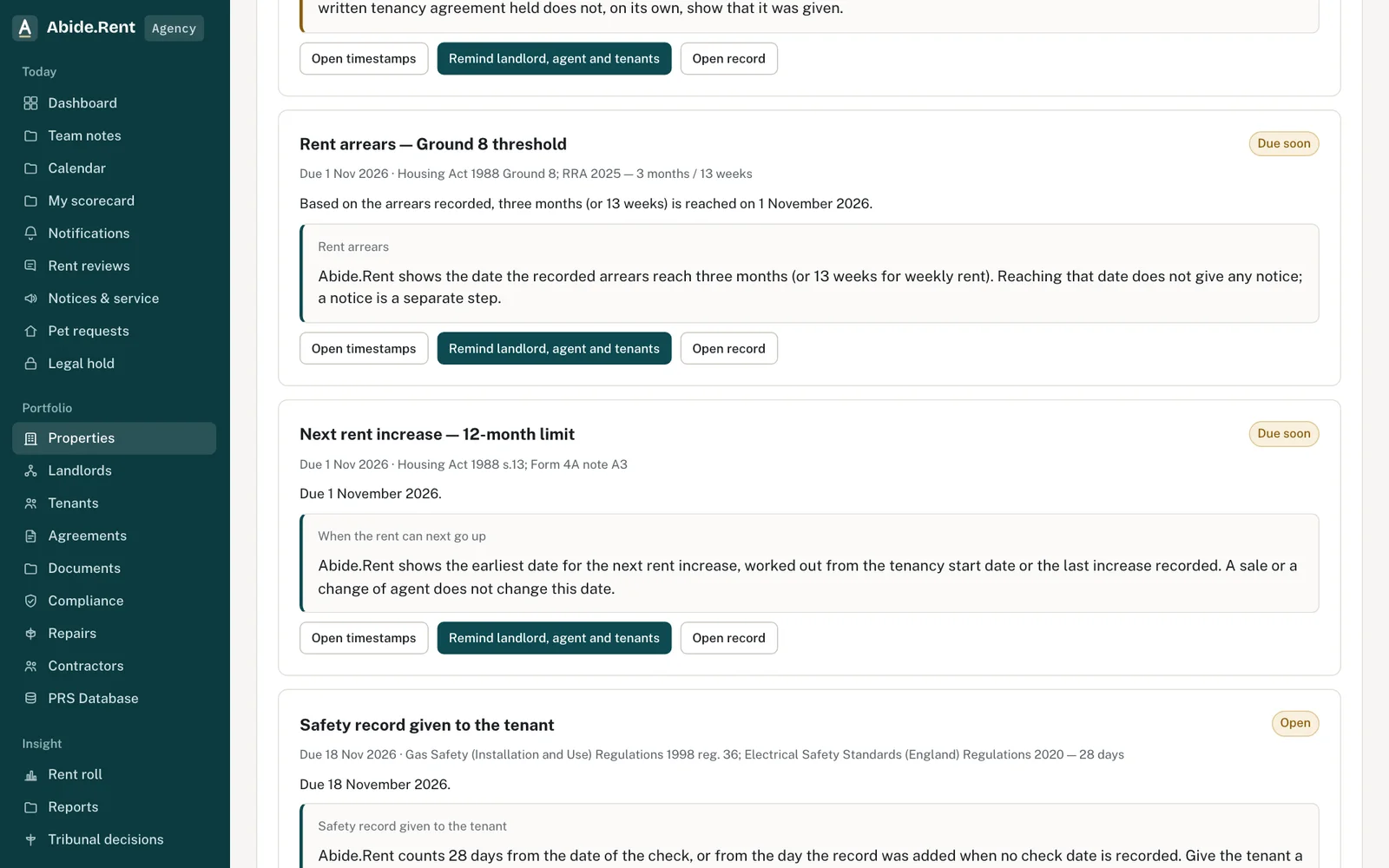
Deadlines on this property, including the next rent increase.
What you are deciding
If you let the property: when Ground 1 or 1A becomes available. If you are the tenant: what the date on your tenancy means.
Your options
- Before the date. Ground 1 or 1A is shown as not available if you choose it.
- After the date. The ground can be chosen. Its own notice period and the re-letting restriction still apply.
- The property is sold with the tenant in place. The tenancy carries on and its dates do not start again.
If you are a tenant
Your tenancy shows the date your protected period ends. It is there for information. It does not mean you will be asked to leave on that date.
A worked example
A tenancy began on Saturday 1 August 2026. Its protected period ends on Sunday 1 August 2027. A landlord who decides in March 2027 to sell sees Ground 1A marked as not available until then. If the tenancy's start date had been entered as 1 July by mistake, correcting it on the tenancy moves the date shown.
What Abide.Rent does for you
- Shows the date the protected period ends, worked out from the tenancy start date.
- Marks Ground 1 and 1A as not available before that date.
- Shows the tenant the same date on their tenancy.
If something goes wrong
- “Ground 1 or 1A cannot be relied on: the earliest date for court proceedings … falls within …”
What to do: Grounds 1 and 1A are not available in the first 12 months. Choose a later date.
Common mistakes
- Reading the end of the protected period as a date the tenancy ends. It is not.
- Leaving a wrong tenancy start date in place. The period is counted from it.
What to do next
More in Notices
 Tenant acknowledgement and the receiptOnce service is recorded the tenant can open the notice, confirm they have it, query it or refer it. Each answer is dated and both sides get a receipt.
 Bring past notices and dates onto the recordRecord a notice you served before you used Abide.Rent, a safety record you gave the tenant on paper, or a request received long ago, each with the day it really happened.
 Following a tribunal referralFrom the tenant's application to the decision: record the directions, prepare and send your statement, and keep track of an inspection or hearing.