What the tribunal can and cannot do
The tribunal decides the market rent. It cannot set more than the landlord proposed, cannot backdate, and can delay the start for hardship.
- Reviewed
- Read
- 2 min
Knowing what the tribunal can decide tells both sides what a referral can and cannot change.
Who this is for: letting agencies, landlords and tenants.
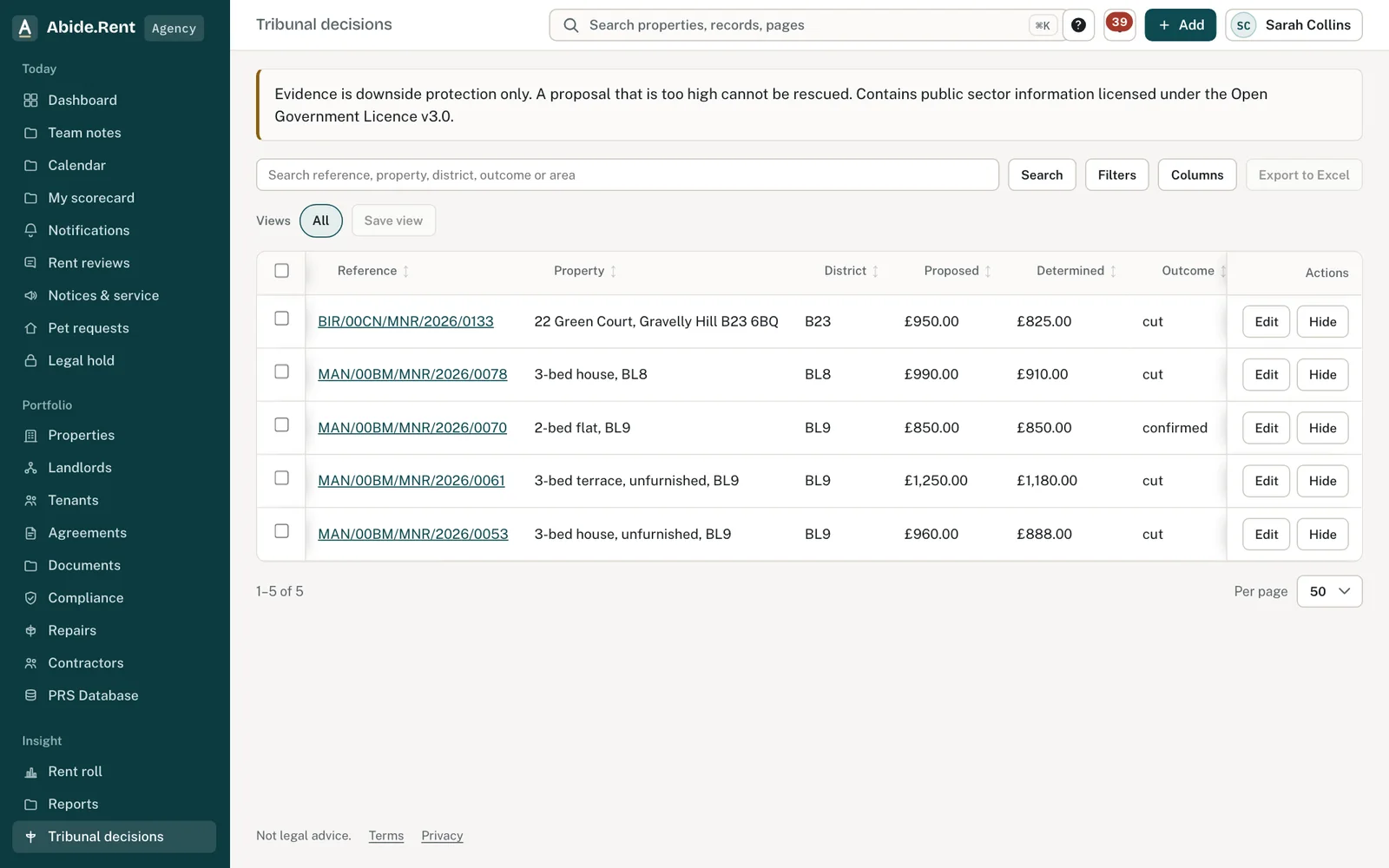
Decisions: proposed rent against the rent the tribunal set.
One decision: the home, the proposed and determined rent, and the case summary.
What you are deciding
Whether a referral is worth making, or worth resisting, given what the tribunal is able to do.
Your options
- It can confirm the proposed rent. If the decision comes after the date in the notice, the new rent starts on the first rent day on or after the decision, not from the date in the notice.
- It can set a lower rent. In 60% of published decisions since the Act came into force, the rent set was below the proposal. The typical reduction was 5%.
- It can delay the start. To a date it directs, within two months of the decision, where the usual start would cause the tenant undue hardship.
- It cannot set a higher rent. The landlord's proposal is the most the tribunal can award. Better evidence protects the figure; it cannot raise it.
- It cannot backdate. The rent runs from the first rent day on or after the decision. There is no back rent for the time the referral took.
Source: Abide.Rent analysis of 846 First-tier Tribunal market-rent decisions published 1 March–12 October 2026 (outcomes: decisions under the Renters' Rights Act rules; waits: all 2026 decisions), as of 12 October 2026.
A worked example
A landlord proposes £1,325.00 against a current rent of £1,250.00, to start on Monday 1 February 2027. The tenant refers it. Suppose the tribunal decides on Tuesday 23 February 2027 that the market rent is £1,300.00. Rent is due on the 1st, so the rent becomes £1,300.00 from Monday 1 March 2027, the first rent day after the decision. The landlord receives £1,250.00 until then, with nothing owed for February. Had the landlord's evidence shown a market rent of £1,360.00, the most the tribunal could have set was still £1,325.00.
What Abide.Rent does for you
- Shows published decisions, so you can see how proposals like yours fared.
- Keeps the evidence behind a proposed rent with the review.
- Keeps the notice, the referral and the evidence pack together on the notice's page.
If something goes wrong
- “Determined rent is above the proposal, so this is treated as a pre-1 May 2026 regime case.”
What to do: The decision was under the old rules. Under the new rules the tribunal cannot award more than the landlord asked.
Common mistakes
- Proposing low and hoping the tribunal will go higher. It cannot.
- Expecting back rent from the date in the notice. The rent runs from the first rent day on or after the decision.
- Budgeting on the proposed rent from the proposed date once a referral is made.
What to do next
More in Rent reviews
 Area statistics and tribunal decisionsArea statistics show what tribunals did in each postcode district. The decisions list holds every published decision. Both show risk, not a rent.
 How the rent range is worked outEach rent review shows a defensible range for the home, and where your proposal sits against it, with the evidence behind it.
 Using tribunal decisions to sense-check a proposed rentPublished tribunal decisions show how proposed increases have fared when challenged. Use them to judge risk, not to set the price.