What happens if the tenant goes to the tribunal?
A tenant can ask the First-tier Tribunal to decide the rent. The tribunal cannot set it higher than the landlord proposed.
- Reviewed
- Read
- 3 min
A tenant who receives a rent increase notice can ask the First-tier Tribunal to decide what the rent should be.
Who this is for: letting agencies, landlords and tenants.
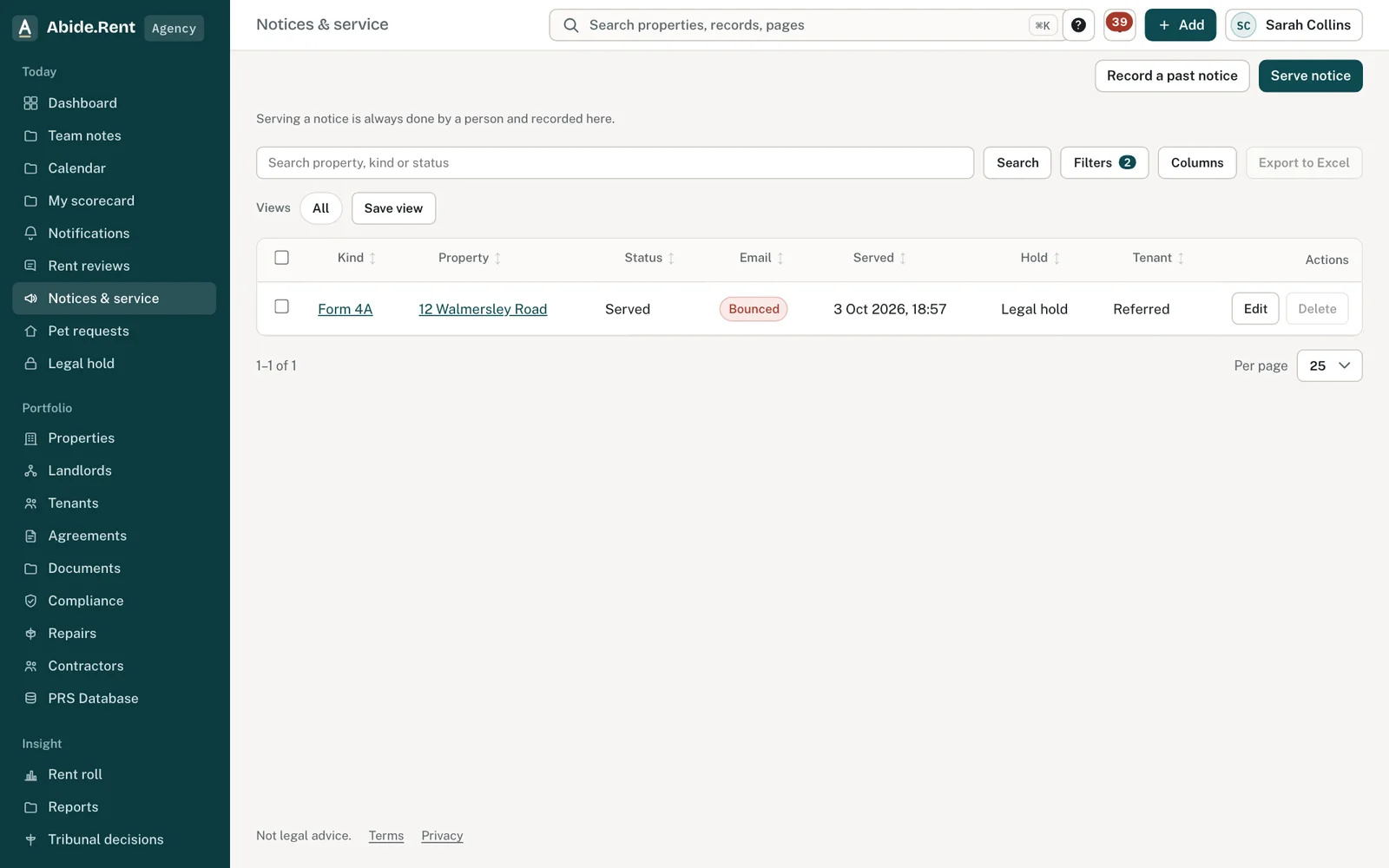
Notices referred to the First-tier Tribunal.
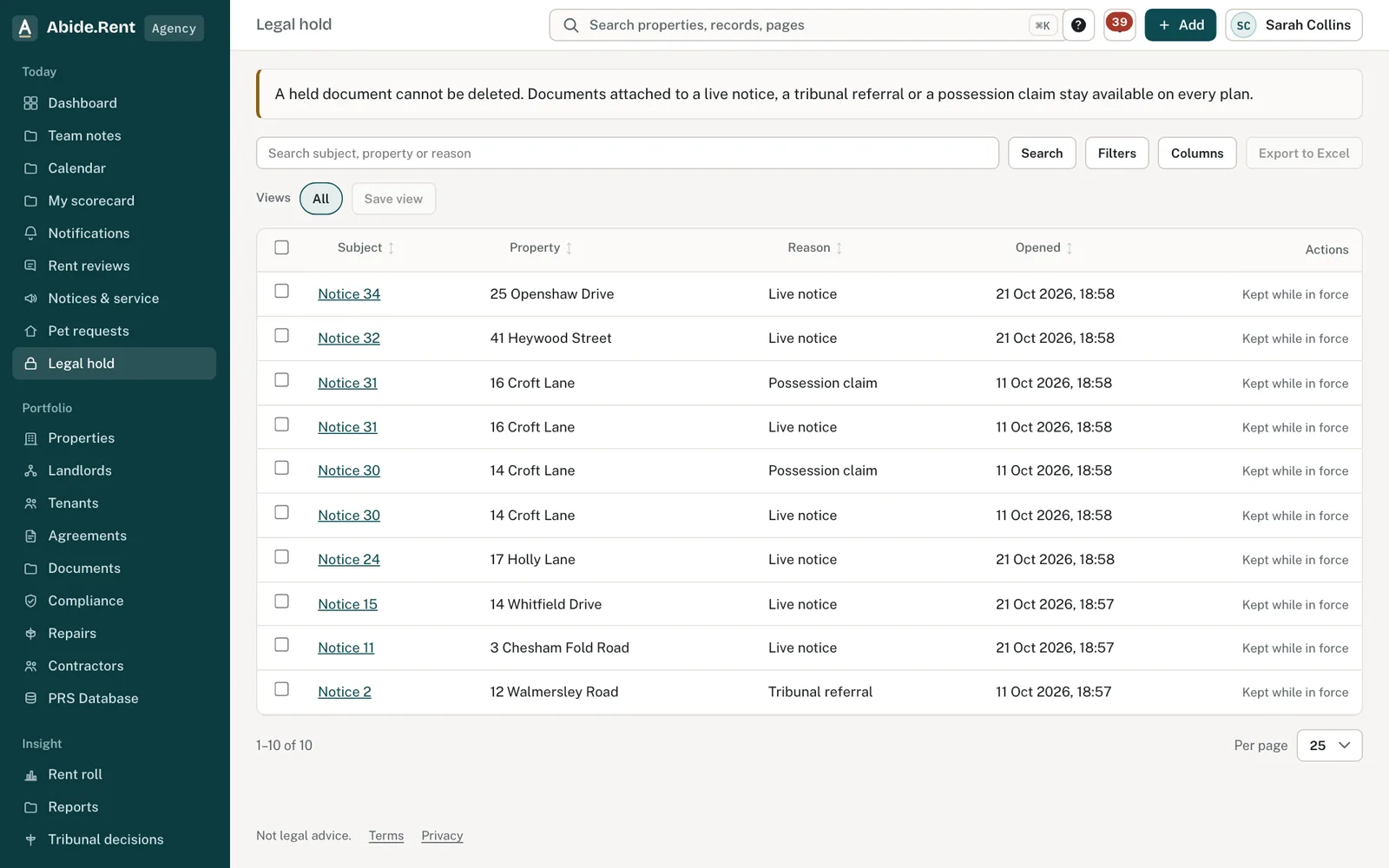
Legal hold: every held record and why.
What you are deciding
If you let the property: how to respond to a referral. If you are the tenant: whether to refer the notice.
Your options
- The tenant accepts. The proposed rent applies from the proposed start date, and the response is recorded.
- The tenant refers the notice. The tribunal decides the rent. It cannot go above the proposal, the new rent starts on the first rent day on or after its decision (or the date in the notice, if that is later) and is not backdated, and for hardship it can set a start date up to two months after the decision.
- The landlord waits for the decision. The typical wait is 82 days, and 84 days in London. The current rent carries on meanwhile.
In Abide.Rent
If you are the tenant, open the notice from your tenancy and choose how you want to respond: accept it, ask a question about it, or say that you are referring it to the tribunal. The application itself is made to the tribunal, not through Abide.Rent, and any fee is paid to the tribunal.
If you let the property, you are told as soon as the tenant responds. The notice is marked as referred, and you can put together the evidence for it from the notice's page. Everything attached to a referred notice stays available to you on any plan.
Source: Abide.Rent analysis of 846 First-tier Tribunal market-rent decisions published 1 March–12 October 2026 (outcomes: decisions under the Renters' Rights Act rules; waits: all 2026 decisions), as of 12 October 2026.
A worked example
A notice proposing £1,325.00 from Monday 1 February 2027 counts as served on Wednesday 4 November 2026. The tenant records a referral in her portal on Thursday 19 November 2026 and applies to the tribunal the same day, paying its fee of £47.00. If the decision came after the typical 82 days, it would fall on Tuesday 23 February 2027. The tribunal could confirm £1,325.00 or set a lower figure, never a higher one, and the rent it sets would apply from Monday 1 March 2027, the first rent day after the decision. Until then the rent stays at £1,250.00.
What Abide.Rent does for you
- Tells the landlord and the agent as soon as the tenant responds.
- Marks the notice as referred and keeps it on hold.
- Prepares an evidence pack from the review, the notice and the record of service.
- Records what each side has done and when. It does not represent either side at the tribunal.
If something goes wrong
- “Record the tenant's application to the tribunal before its decision.”
What to do: Record the referral first, then the decision. - “The application cannot be dated before the notice was served.”
What to do: Check the date of the application. - A held file cannot be deleted
What to do: That is deliberate: a referral puts the file on legal hold.
Common mistakes
- Treating a referral recorded here as the application. The tenant applies on the tribunal's own site.
- Charging the proposed rent while a referral is waiting.
- Putting the evidence together at the last minute. The review already holds the lettings you relied on.
What to do next
More in Rent reviews
 A rent increase from start to finishThe whole path of a rent increase: the figure, the landlord's approval, Form 4A, service, the tenant's reply and, if it comes to it, the tribunal.
 Comparable lettings: the evidence that wins at the tribunalThe tribunal sets the rent from lettings of similar homes nearby. Achieved rents count far more than asking rents; three strong lettings make a case.
 Condition and improvements: what the tribunal disregards (s.14(2))The tribunal values the home as it is let, but ignores the tenant's own improvements and any damage the tenant caused. Record both on the review.