A rent increase: what each side does, and when
From the first reminder to the new rent: the agency's proposal, the landlord's approval, the Form 4A, the tenant's options and the tribunal.
- Reviewed
- Read
- 4 min
A rent increase on an assured periodic tenancy in England is made with a Section 13 notice on Form 4A. This guide shows each step, who takes it, and the reminders.
Who this is for: letting agencies, landlords and tenants.
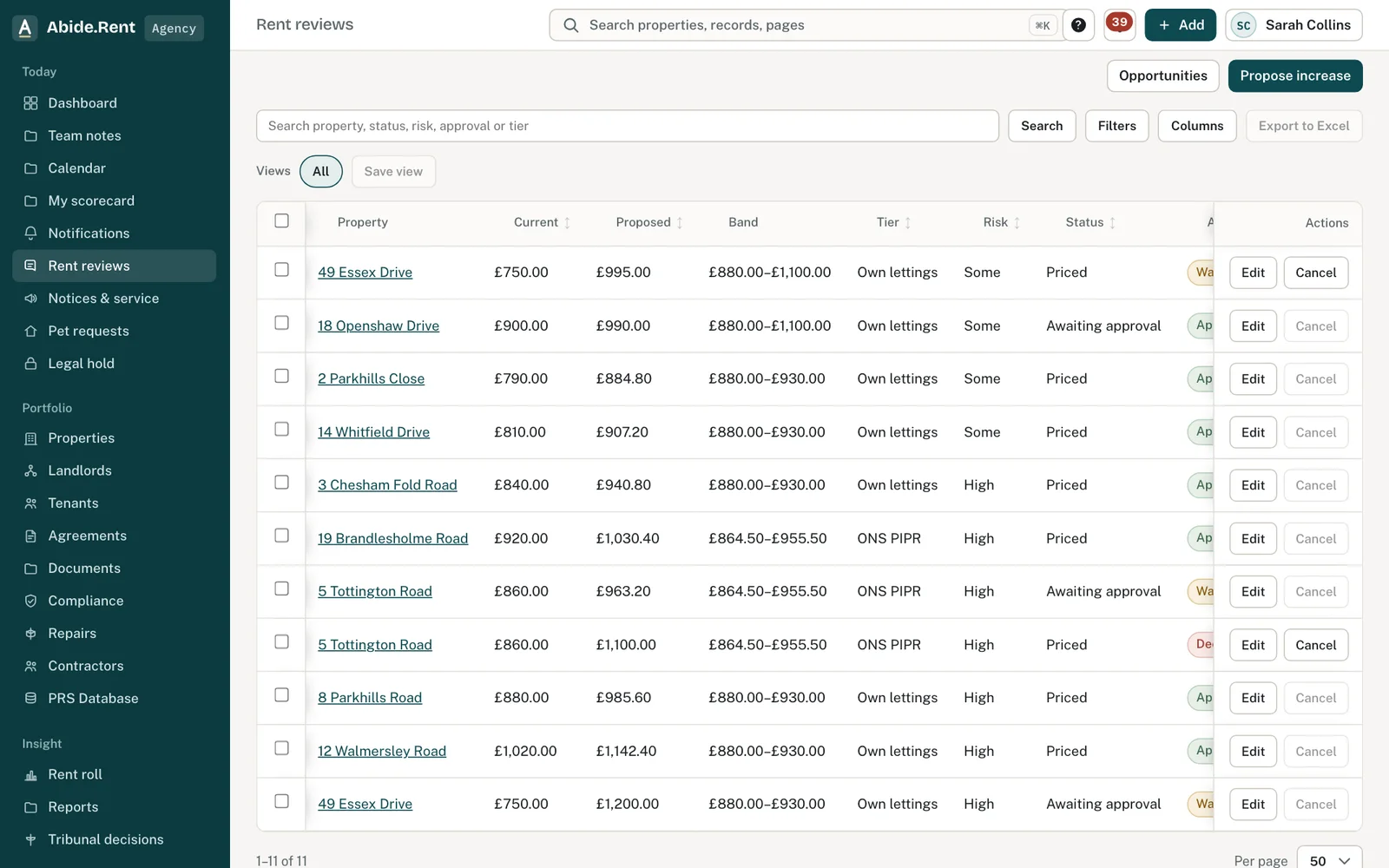
Rent reviews: each proposal with its risk and the landlord's approval.
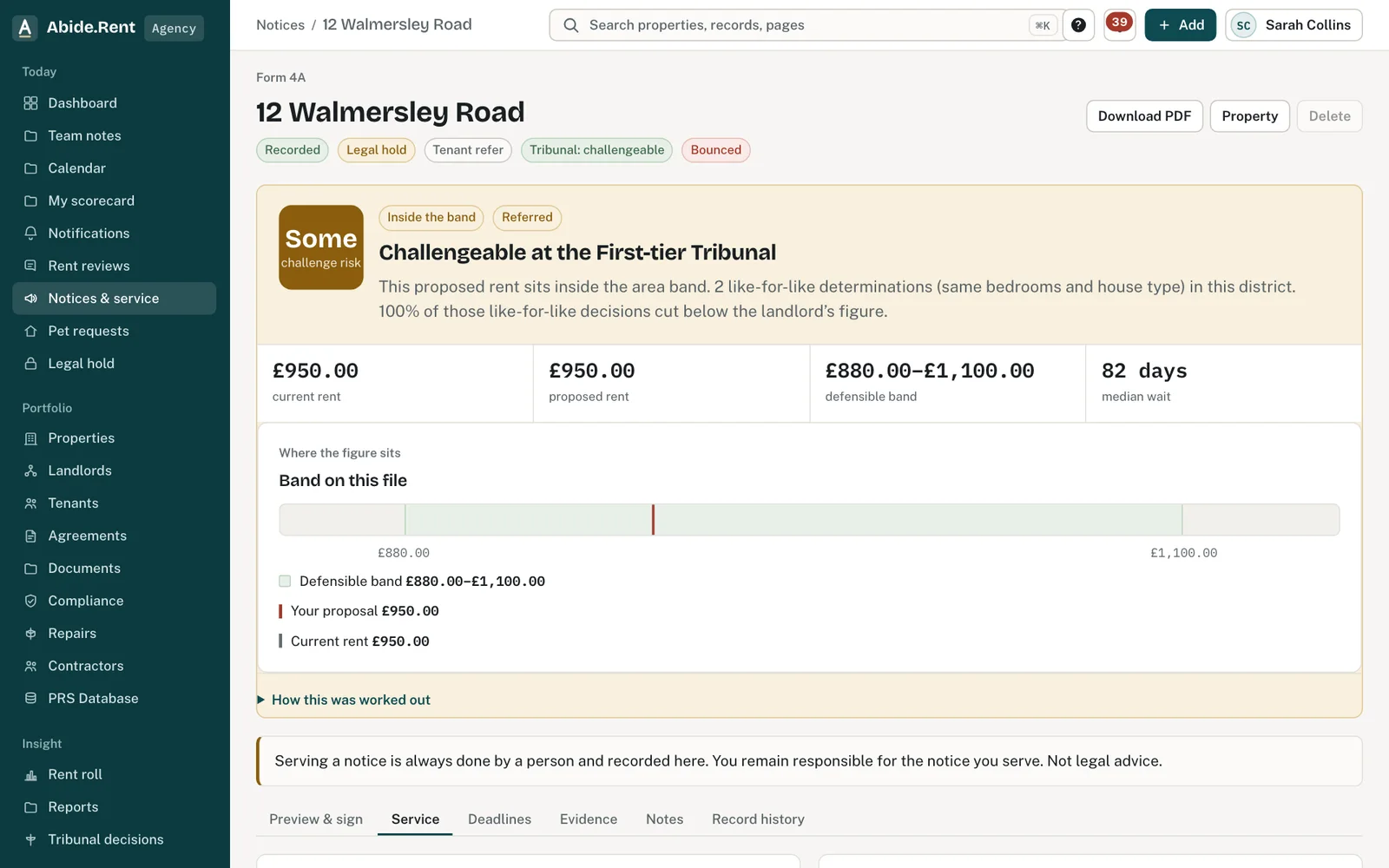
A served notice: service, the tenant's options and what happens next.
What you are deciding
When to propose a new rent, how much, and, for the tenant, whether to accept it or apply to the tribunal.
Your options
- The tenant does nothing. The new rent starts on the date in the notice. A tenant does not have to reply.
- The tenant applies to the tribunal before that date. The rent stays as it is until the tribunal decides. It cannot set more than the notice proposed.
- Both sides agree a different figure in writing. The agreed rent starts from the agreed date instead.
The journey at a glance
| When | Step | Who | The law |
|---|---|---|---|
| 90, 75 and 60 days before the earliest date | Reminder that a review is coming | Landlord side | — |
| Any time before serving | Proposal, with the evidence for the figure; the landlord approves where the agreement asks | Agency proposes; landlord approves | — |
| At least two months before the new rent starts | Form 4A served on every named tenant | Whoever has authority to serve | Housing Act 1988 s.13(2) |
| The start date | The beginning of a rent period, at least 52 weeks after the last increase | — | s.13(2), (3A), (3B) |
| 14 days before the start date | Letter to the tenant setting out their options | Abide.Rent | — |
| Before the start date | The tenant may apply to the First-tier Tribunal (fee £47.00) | Tenant | s.13(4) |
| The start date | New rent goes on the rent account; confirmation sent to the tenants, any guarantor and the landlord | Abide.Rent | — |
| If the tribunal decides | Its rent starts on the date in the notice if it decided before then; otherwise on the first rent day on or after the decision. For hardship it can set a later date, within two months | Tribunal | s.14ZB |
What each party does
Letting agency
- Prepare the proposal and the evidence for the figure when the first reminder arrives.
- Send it to the landlord for approval if the agreement asks for that. Abide.Rent chases the landlord 3 and 7 days after asking.
- Generate Form 4A, check the dates Abide.Rent shows, sign it and serve it on every named tenant. Record how and when.
- If the tenant applies to the tribunal, record the application, then the decision when it comes.
Landlord
- Approve, query or counter the proposed figure. Nothing is served without your approval where your agreement requires it.
- On your own account, or a let-only or rent collection service, you serve the notice yourself.
Tenant
- Read the notice in your portal. You do not have to reply.
- If you think the rent is above the market rent, you can apply to the First-tier Tribunal before the start date.
- 14 days before the start date you are sent a letter setting out your options.
- If you do nothing, pay the new rent from the start date.
When Abide.Rent reminds whom
- The landlord side: 90, 75 and 60 days before the earliest date a new rent can start, then 60, 30, 14, 7, 3 and 1 days before, on the day the start date in a served notice.
- The landlord, when asked to approve: 3 and 7 days after.
- The tenant: one letter, 14 days before the new rent starts.
A worked example
A tenancy at £1,250.00 a month, rent due on the 1st, can next go up from Monday 1 March 2027. The agency is reminded on Tuesday 1 December, Wednesday 16 December and Thursday 31 December 2026. The landlord approves £1,325.00 and the notice is served by hand on Friday 11 December 2026. The tenant is sent her options letter on Monday 15 February 2027. If she does not apply, the new rent starts on 1 March 2027. If she applies and the tribunal decides on Monday 3 May 2027, its rent starts on Tuesday 1 June 2027, unless it sets a later date for hardship, no later than Friday 2 July 2027.
What Abide.Rent does for you
- Works out the earliest start date and refuses one that is too early or not at the start of a rent period.
- Puts the new rent on the rent account on the right date, and pauses it while a tribunal application is open.
- Sends the confirmation of the new rent to the tenants, any guarantor and the landlord.
If something goes wrong
- “The start date is too early.”
What to do: Choose a date at least two months after service, at the start of a rent period and at least 52 weeks after the last increase. Abide.Rent suggests the earliest. - The tenant says they will refer the notice but no application arrives
What to do: After the start date, record that no application was made and how you checked. The new rent then applies from the date in the notice.
Common mistakes
- Serving one joint tenant only. Every named tenant must be served.
- Expecting back rent after a tribunal decision. The tribunal's rent is never backdated.
What to do next
More in How it works
 A tenant leaving: notice, move-out and the depositFrom the tenant's notice to the deposit being returned: the dates, who does what, and the reminders.
 Rent arrears and a Section 8 noticeFrom the first unpaid rent to the earliest date for court: the Ground 8 threshold, Form 3A, notice periods and the reminders.
 A change of agent, or a sale: what moves and who is toldWhat happens to control, documents, duties and the deposit when a landlord changes agent or sells, and the letters the tenant must get.